A New Era for a Historic Legend: The Smeaton Vaults
May 19, 2026
We are absolutely thrilled to finally pull back the curtain and show you what we’ve been up to. If you’ve visited us at The Brewery recently, you might have noticed a bit of extra buzz coming from downstairs. After months of hard work, we’ve officially completed the renovation of the Smeaton Vaults.
It’s always a bit of a balancing act when you’re dealing with a site as unique as ours. How do you take a space that’s been around since the 18th century and make it feel fresh, while honouring its heritage? Our vision was simple: we wanted to enhance the modern conveniences our clients expect while preserving that raw, industrial soul that makes the vaults so remarkable.
Industrial Origins
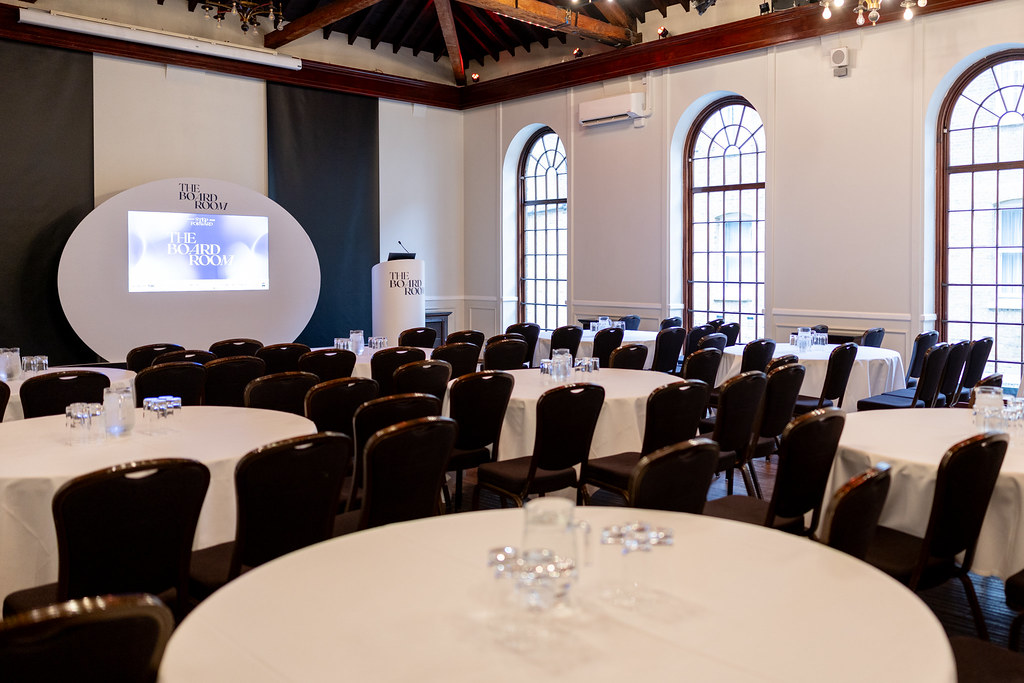
To understand why these rooms are so special, you first have to look up. The Smeaton Vaults sit beneath the Porter Tun. When you stand in that room and cast your eyes upward at the massive king post timber roof – with its incredible unsupported span – you are actually standing inside the largest surviving building from the original 18th-century brewery. The building, back then, was known as the Great Storehouse, and later the Great Tun Room. It was a massive storage space with deep brick vaults underneath it. What surprises many people today is that the Porter Tun room had its immense height divided horizontally, essentially capping off the structure to create the King George III room at the bottom, while leaving the majesty of the Porter Tun room directly above.
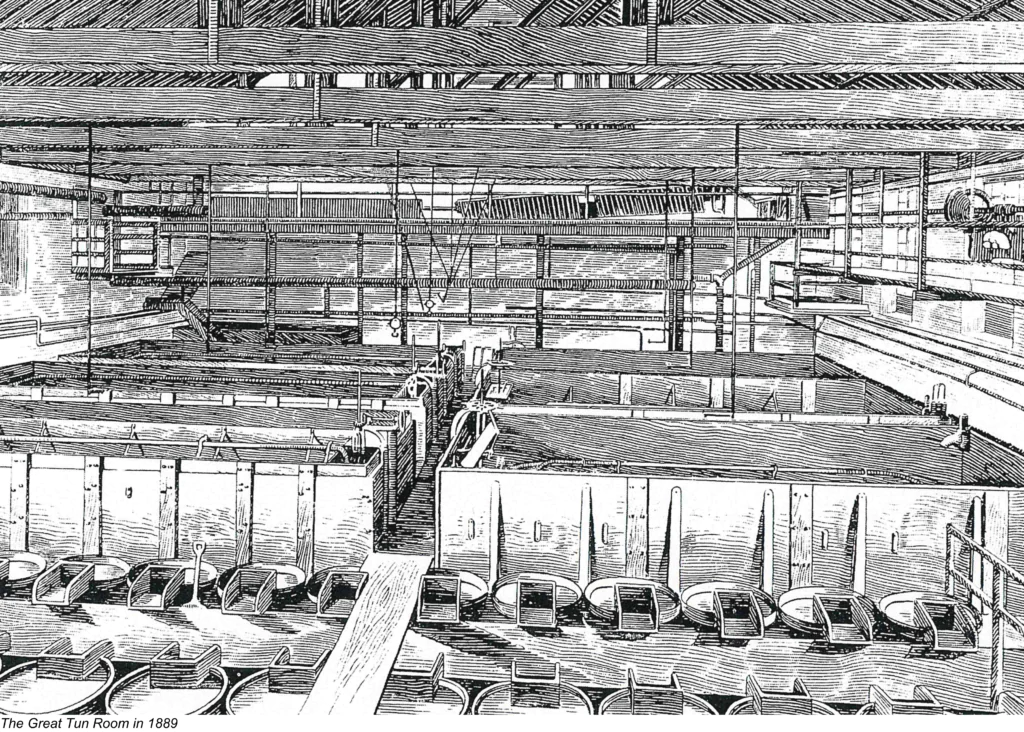
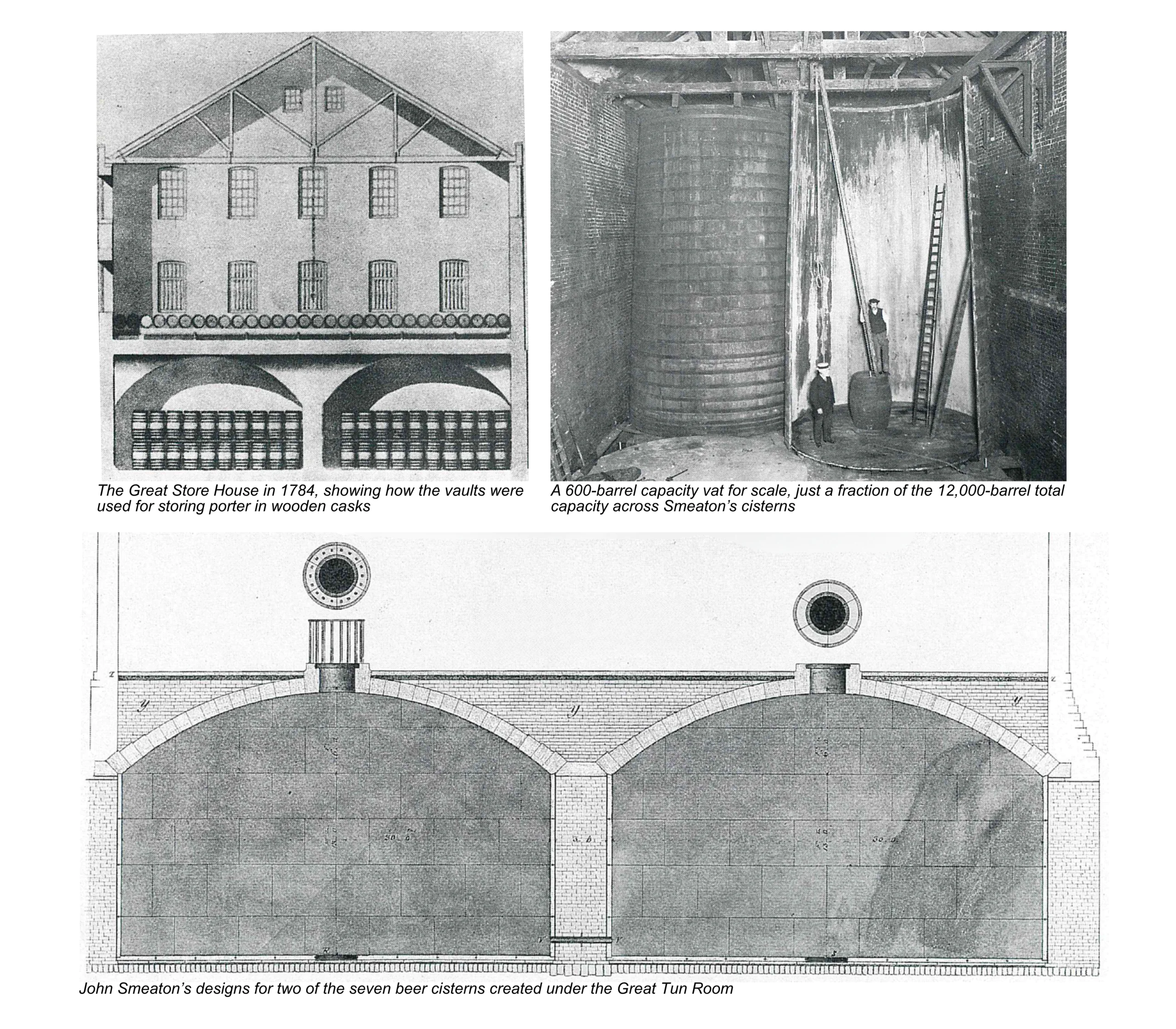
The story starts in 1774 when a ten-year-old Samuel Whitbread Junior was given the privilege of laying the foundation stone for the Great Storehouse. It took eight years to build, and when it finally opened in 1782, the vaults below were purely functional. In those early days, they were dark, cool spaces used to house hundreds of individual wooden casks filled with maturing porter.
However, Samuel Whitbread (Senior) wasn't the type to stick with the status quo. He was a disruptor before that was even a word. He came up with what his peers called a "singular idea." He looked at the vast brick vaults and thought: “What if we did away with the casks entirely? What if the rooms themselves were the containers?” It was a massive, untried concept – filling the entire vault directly with beer.
Engineering Miracles and the Waterproofing Struggle
As you can imagine, turning a brick basement into a giant pint glass is easier said than done. The first attempt was, quite frankly, a bit of a disaster. Whitbread hired Robert Mylne, the architect who built Blackfriars Bridge, to waterproof the space. Unfortunately, it didn't go well. When they tried to fill the vaults, the beer leaked through the walls "as through a sieve."
But Whitbread didn't give up. Instead, he called in the Father of Civil Engineering himself: John Smeaton. If the name sounds familiar, it’s because he’s famous for building the Eddystone Lighthouse in Cornwall – the world's first successful offshore lighthouse built on a dangerous rock in the open sea. It was there that he pioneered the use of a revolutionary type of concrete that cures underwater, a breakthrough that changed construction forever.
Smeaton treated the brewery like a massive engineering puzzle. He didn't work alone, either. He consulted with the best minds of the Industrial Revolution, including pottery legend Josiah Wedgwood and steam engine pioneer Matthew Boulton. They even brought in specialist ship caulkers to seal the joints. By 1790, they had successfully created seven waterproof cisterns with a staggering total capacity of 12,000 barrels.
Wait – seven? You might be wondering. Today, we talk about the two main areas: the King and Queen Vaults. Back then, these were just two of seven individual beer pits built into the subterranean grid. Building a series of separate chambers was pure genius: it meant that if one tank leaked or the beer went bad, you didn't lose the whole lot. It also allowed the brewery to have beer at different stages of maturation. The result was a triumph; the beer matured so well in these huge volumes that local pub owners started praising its superior flavour.
The Royal Inspection
By the late 1780s, the brewery was such a marvel of modern technology that it became a must-visit for the elite. In 1787, Whitbread’s brewery had the ultimate stamp of approval: a royal visit from King George III and Queen Charlotte, along with their daughters.
Apparently, the King was incredibly impressed by what he saw. The royal party spent over two hours touring the site, admiring the scale of the operation and the ingenuity of the cisterns. They were so fascinated by the scale of the technology that the Queen and the princesses even climbed inside one of the empty cisterns just to experience its vastness from the inside. One famous anecdote from the day mentions that the brewery's storage vessels were so large they could comfortably hold an entire dinner party! It's in honour of this very moment that the spaces were forever named the King and Queen Vaults.
The high-profile visit didn't just leave a lasting legacy on our floor plans; it also captured the imagination of London’s popular culture. The famous 18th-century satirist Peter Pindar even penned a cheeky poem to mock the spectacle of royalty hanging out in a busy industrial yard, writing:
Now moved King, Queen, and Princesses so grand,
To visit the first brewer in the land;
Who sometimes swills his beer and grinds his meat,
In a snug corner christened Chiswell Street.
It’s quite a thought, isn't it? When you’re hosting an event in the Vaults today, you’re quite literally standing on the same ground that was inspected and praised by royalty over two centuries ago – an occasion so monumental it was even immortalised by the city's great poets.
Architectural Legacy
One of our favourite things about the vaults is that they still hint at their brewing past. When you walk through the space now, keep an eye out for these bits of history:
The Sloping Floors: If you feel a slight tilt underfoot, don't worry – it’s not the cocktails! The floors were purposefully built with a distinctive slope. Why? Because when it came time to empty those 12,000 barrels of beer, gravity was the best tool for the job. The slopes ensured the beer drained perfectly toward the exit pipes.
The Iron Bridge: The Queen Vault is a real gem because it has kept much of its historical character. Look up, and you’ll see the old iron bridge walkway. This allowed brewery workers to walk high above the beer cisterns to monitor the porter as it matured.
Original Copper Pipes: To the back of the Queen Vault, you’ll see copper piping running along the wall. These were the literal veins of the brewery, originally used to transport fresh brew from the fermentation tuns on the upper floors down into Smeaton’s cisterns. While they’ve been repositioned to frame the event space, they are entirely authentic.

The Recent Renovation
So, what’s new? We’ve spent a lot of time thinking about how to give the Smeaton Vaults an aesthetic overhaul while retaining their historic details. Rather than stripping away the venue's identity, our focus was on creating a premium event environment by updating the design, tech and infrastructure. In the Queen Vault, the prominent iron bridge walkway and the industrial copper piping have been meticulously polished, remaining as centrepiece features that anchor the rooms to their 18th-century roots.

The physical space has been completely revitalised to bring a high-spec finish. We’ve refreshed the sloping floors with new striking geometric vinyl flooring, complemented by new lead-grey panelling and a fresh floor-to-ceiling repaint.
The sound quality has been optimised with acoustic slatted panels installed directly onto the walls to balance sound reflections, paired with a built-in d&b audiotechnik PA system to deliver crystal-clear audio during speeches and live music.
We’ve also re-engineered the lighting using an advanced Lutron-controlled layered system with ambient fixtures and light strips. This includes colour-changing RGBW LEDs in both spaces, giving you full atmospheric control and the ability to create a dynamic room wash.
The technical focal point is a high-definition LED digital display screen built directly into the far wall of the King Vault, replacing traditional projection screens with an integrated media setup – ensuring that while the walls are 250 years old, the experience feels modern.
We’d love for you to come and see the results for yourself. Whether you’re planning a corporate event, private party, or a wedding, get in touch with our team to book a site visit.
Back to blog