Success Story Series #10: Adrian, Head of Technical Services
July 9, 2026
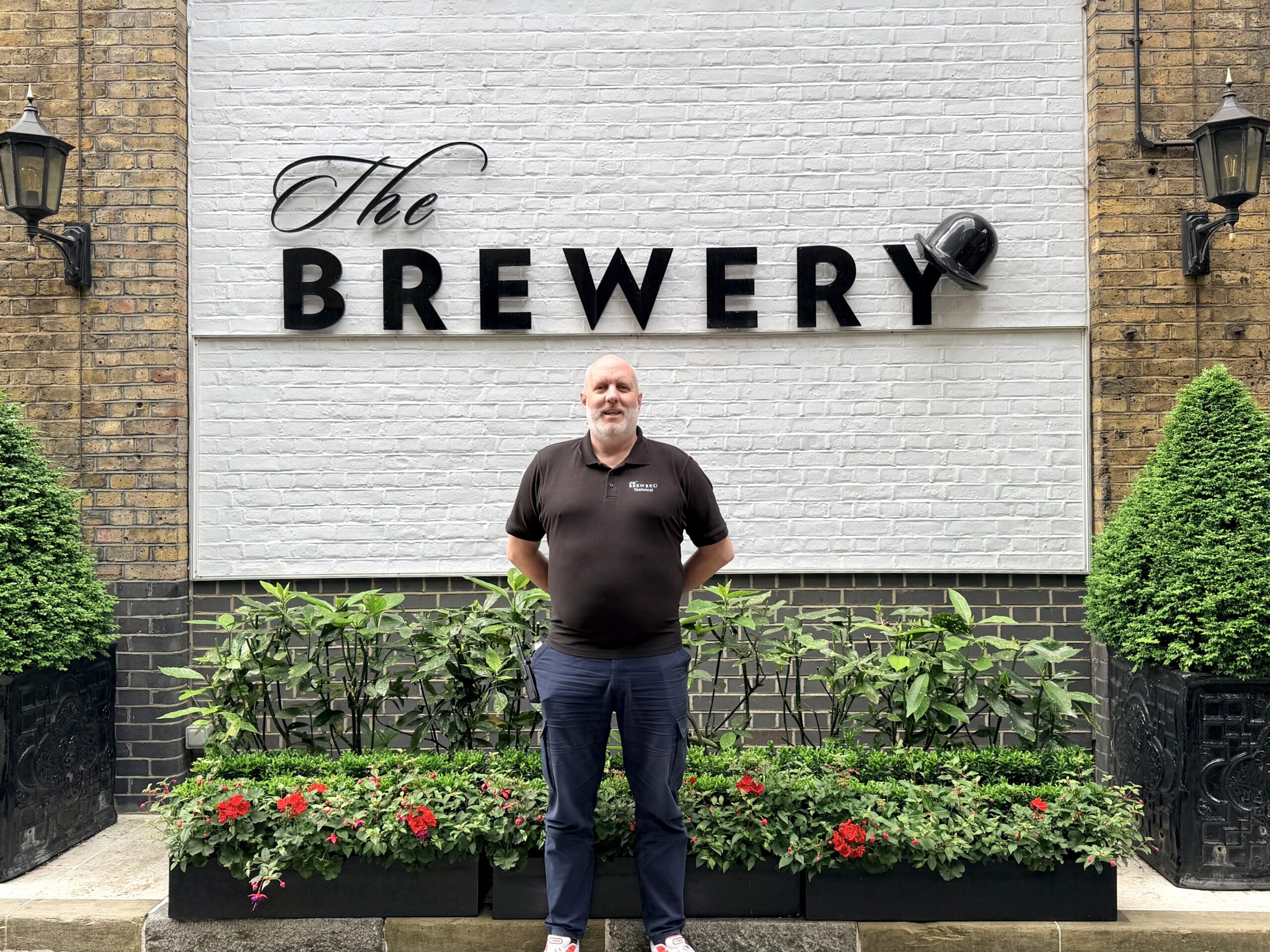
This September, Adrian marks a big milestone – twenty years since he first walked through the gates at Chiswell Street. Having spent two decades learning how the building works, he is essentially the venue’s human Google; if you have questions about a room setup, the tech, or how to pull off the impossible, you ask Adrian.
We sat down with our Head of Technical Services to talk about the moving parts behind every event, stripping away the venue’s old hotel look, and why he’s still not bored after twenty years.
You first started at The Brewery nearly 20 years ago through the AV supplier we were using at the time. Can you take us back to those early days – what was the venue like?
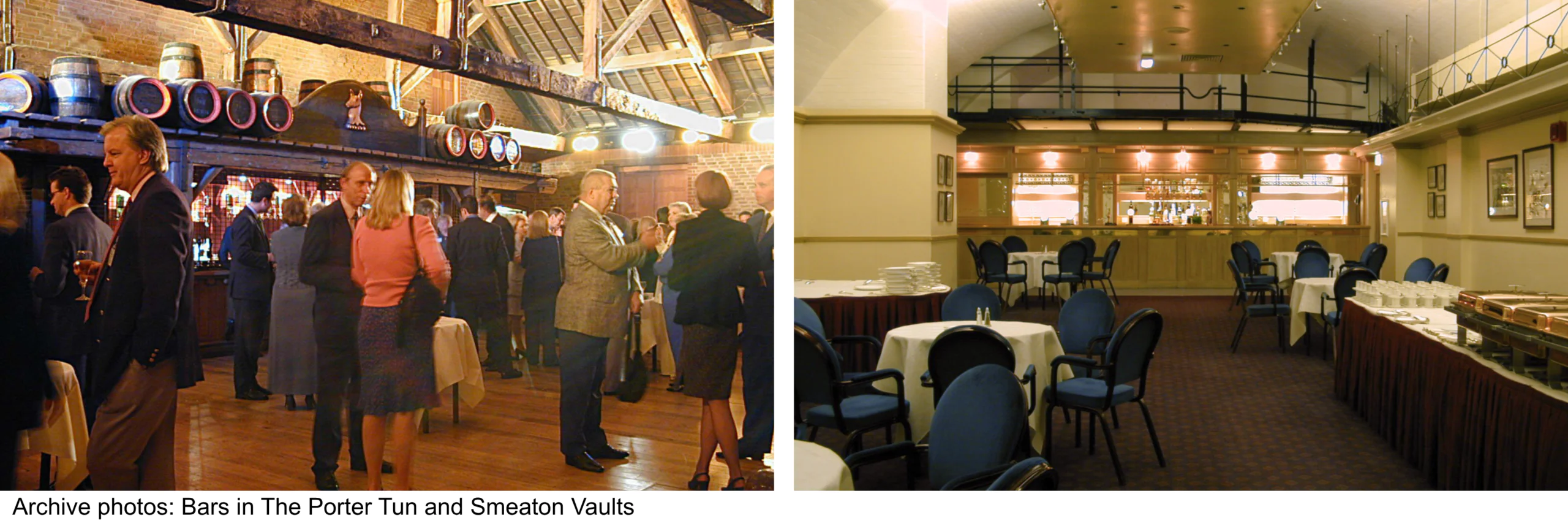
When I first started, I arrived right in the middle of a transitional phase. The venue had recently changed ownership, so there had been a lot happening in quite a short space of time. Over that summer, Whitbread had sold the site, and the event space and the hotel were split into separate businesses. The venue had just completed a £1 million refurbishment and was shedding its ‘hotelness’ and becoming a dedicated events venue.
The old corporate hotel styling was removed – permanent bars were ripped out of some rooms, the dark oak panelling was painted white, and new LED lighting and PA systems were being installed throughout. The core spaces were all there – the Porter Tun, King George III, Queen Charlotte, Sugar Rooms, Smeaton Vaults, and James Watt – but Grubstreet didn’t exist as we know it today. Back when Whitbread had the space, those areas were known as the City Cellars, but when I started, they were no longer used for events and were back-of-house.
The business was busy, delivering a mix of conferences, dinners and meetings – similar types of events to what we do now – but on the technical side, it was a bit like the Wild West. Event managers were looking after external suppliers, sound levels, rigging and all sorts of things. When you think about what we deliver today, that seems like madness now. But events were on a smaller scale then, and there were far more external AV suppliers coming in.
That was really why my role was needed. I was brought in to be the appointed technical person on site – someone who could manage the external suppliers, liaise with local environmental services, monitor sound levels, and keep an eye on the technical side properly. Documentation was also very limited at the time, so I designed and created all the production details for the external suppliers to use.
I’d often support an AV setup in one room during the day, then help turn it around for another event in the evening with a completely different external AV supplier. At the start, it was just me, which meant long hours, but it was good fun!
Can you tell us a bit about your background and how your role has evolved over the years?
I started out in local theatre. My very first technical gig was operating the lights for plays at a village hall with the Holmer Green Players when I was 15. I enjoyed it so much that I stuck with it for ten years, eventually studying a BTEC in Performing Arts and doing City & Guilds qualifications in entertainment and industrial electrics.
That led me to London’s West End, working on productions like The Phantom of the Opera, Starlight Express and Les Misérables. Lighting was always my main passion, which eventually transitioned into AV production. I worked for a few AV companies before ending up at The Brewery as Technical Support Manager with our former AV supplier, Presentation Services Limited (PSL). It was an important role for PSL to have on-site at The Brewery, so the interview process was quite thorough. I remember going through several interviews, including one with the General Manager at the time, as they needed someone who could represent the AV supplier within the venue and build strong relationships with the team. I spent six years with PSL before The Brewery brought me in-house as Assistant Facilities and Health & Safety Manager.
Over the years, the business has changed ownership, the team has grown, and I’ve progressed to Head of Technical Services. I’ve gone from managing a single AV setup or troubleshooting local sound levels to overseeing the technical infrastructure of the building – AV, IT networks, CCTV, access control and long-term technical development.
I think it’s quite rare to find your calling so early on in life and still love it all these years later. When I first started, people told me I’d get bored after a year or two because of the calendar cycle of repeat events. Nearly twenty years later, I can safely say I’m still not bored. Every day is a school day. I’ve always wanted to learn about the building, and because of that, my days have always been varied – one minute I’m looking at floor plans, the next I'm fixing an IT issue or helping out during a massive turnaround. I love the history of this place, the variety of the events and the people.
What does the Head of Technical Services do, and what does a typical day look like for you?
My role covers anything with a cable attached to it, which means my responsibilities jump from small, hands-on tasks to long-term strategy. I might be remaking a CAT5 cable, soldering an XLR connector or fixing someone’s laptop in the morning, and then spending the afternoon planning venue-wide software rollouts or looking at budgets.
A typical day starts around 7:30am. I’m often on the early shift, so the first thing I do is check that everything is ready for the events running that morning – the background music, microphones, LED colours and digital signage screens. Then I check whether there are any last-minute requests.
Once the morning rush quietens down around 10am, I look ahead. I’ll review production schedules for events happening the next week, look at complex setups a month down the line, or research new tech upgrades. Another part of my role is answering internal questions about how to make an event work in our spaces, whether it’s already confirmed or still at the proposal stage. I suppose I’ve become a bit like Google for The Brewery. It’s a balancing act between keeping the immediate day-to-day running and building the technical roadmap for the future.
Then there are the unexpected bits that come in throughout the day. That’s events. You can plan as much as you like, but there’s always something. And in between all of that, of course, there’s making plenty of tea.
Tell us about your team. What role do they play in event delivery, and what kind of skills are important in Technical Services?
There are three of us in the team – Alex, Xander and me. We look after a huge range of things, from external suppliers such as bands and entertainers to supervising production companies, installing equipment, supporting rigging and being a presence around the building to make sure everything is safe, compliant and running properly. I have complete confidence in them to do their jobs well. They constantly go above and beyond, and they’re always ready to handle whatever live events throw at them.
Our department sits right in the middle of everything, connecting the initial sales and planning stages to the live delivery. On any given day, we’re communicating directly with everyone – clients, external suppliers, our in-house AV supplier Encore, and our internal teams.
Because we interact with so many different people, the most important skills in our department aren’t just technical. You can teach someone how to use a piece of kit. What really matters is great communication, flexibility, a helpful attitude and problem-solving. You need solid technical understanding, but just as importantly, you need the ability to stay calm under pressure during busy periods, as well as a willingness to support others.
Technology in events has changed so much over the past 20 years. What are some of the biggest changes you’ve seen at The Brewery, and how has the venue adapted?
Technology has changed drastically since 2006. Projectors were still using xenon lamps, which were powerful bulbs that generated a lot of heat, used a lot of electricity, and had a short lifespan. LED technology was very young, and LED walls were mainly something you saw at large concerts or very high-budget events because they were expensive. Event technology in general was much less developed. You were more likely to see a flip chart in a room than an attendee with a laptop – and background music was still being run off a stack of CDs!
Now, clients have so many more options. Registration systems, badge scanning, screens on exhibition stands, event apps, data and analytics tools, AI – the list goes on. A fair portion of our clients are in the tech sector, so we’ve always had to push our infrastructure ahead of the curve so we can support these options.
LED has probably been one of the biggest changes. LED walls are now lighter, cheaper and much more accessible. Projectors have moved from lamps to lasers. The quality and flexibility of what you can do in a room has improved so much.
One upgrade that made a noticeable difference at The Brewery was the introduction of colour LED lighting. This means we can wash a room in brand colours or change the feel of a room quickly, which is a huge benefit to our clients.
Can you share a particularly memorable event that stood out for you?
Two different ones come to mind. The first was the annual gala dinners for The Old Vic theatre, which we hosted two years in a row. They were incredibly elaborate, theatrical transformations of the space. One year, the production design involved building a dark, eerie forest that led guests through hanging trees towards the stage in the Porter Tun. It looked amazing, but technically there was a significant amount to think about – calculating load points, rigging weights and managing tight access windows for load-in and de-rig.

The second was much closer to home, our Chairman Rupert's wedding reception in 2023. I worked with the wedding planner and the on-site team to look after the production. That included the lighting design, colour choices, gobos, rigging details and sound. Rupert has an eye for detail and has seen many incredible events here over the years, so to see him and his guests walk into the room and be genuinely blown away was a real achievement. He called the next day to say thank you, which meant a lot.
It’s amazing how much of an effect sound, lighting and production have on a space and the way people feel when they walk into it. When you see that reaction, it makes it all worthwhile.
How do Technical Services and Encore work together to make sure events run smoothly from planning through to delivery?
We work very closely with Encore. We’re in the same office, which helps, because there are constant conversations happening throughout the day about layouts, client requirements and operational delivery. I regularly join Encore’s sales team on client site visits, and our team work hand-in-hand with their production managers during live events.
We’ve never viewed our in-house AV partner as an outside contractor, but rather as another department of The Brewery. That’s how it needs to be because they are involved with everyone across the venue. During our busy months, every square inch of the venue can be in use. For quick room turnarounds, Encore, Operations, Logistics, Kitchen and Technical Services all need to coordinate. You might have chefs needing to move food from one floor to another, and at the same time, Encore loading equipment out. There are so many moving parts, and it’s only successful if everyone communicates and the planning is meticulous.
What do you think has helped you build such a long and successful career at The Brewery?
I think it comes down to the attitude that we are here to help. Years ago, before I came to The Brewery, I had an experience delivering equipment to a venue where the on-site team were not particularly helpful. It stayed with me because I remember thinking: Everyone is here for the same reason. We are all trying to deliver the event.
That shaped the way I wanted to approach the job. If someone turns up at The Brewery and needs help, and we can help them, we will. That has always been my approach. We don’t just say no. We ask more questions and try to find a solution.
Like any venue, we have processes. We have loading bay access times, operational restrictions, and health & safety requirements, but where we can be flexible, we will be. Where we can make someone’s life easier, we try to. That is a mindset we share as a team. We are here to support the venue, the clients, the suppliers and each other.
I think that has helped us build a good reputation with suppliers and AV companies over the years. People know we are helpful, solution-focused and generally nice people to work with, and that goes a long way.
How would you describe the culture at The Brewery?
Without a doubt, we are like one big family. We are in this together and when times get tough, everyone pulls together. A recent example was a large event where the operational schedule shifted, leaving us with a fraction of the turnaround time we expected. In moments like that, you see the true culture of The Brewery. Everyone mucks in to get the job done.
I’ve seen times when a room needs to be turned around quickly, and suddenly, there are people from all different departments helping move tables and clearing spaces. Everyone drops what they’re doing to make sure the event succeeds. It’s a very supportive place – we all know events can be unpredictable, but we also know we’ve got each other.
Looking ahead, what tech trends do you think will have the biggest impact on events?
AI is definitely the biggest thing right now, although I think the events industry is still figuring out exactly what that looks like. It reminds me a bit of the sudden rush towards virtual and hybrid events during the pandemic. Back then, everyone assumed digital events would permanently replace face-to-face events, but the moment restrictions lifted, people were back.
That human desire to meet, network and share an experience in a room isn’t going to change, no matter how advanced technology becomes. Where I think AI will make a real impact is behind the scenes – streamlining data analytics, registration platforms, smart booking systems and planning tools.
Technology will enhance how we organise and measure events, but the core value will always be about bringing people together in person.
What’s something your colleagues might be surprised to learn about you?
This was probably the hardest question to answer. I have a joke mug on my desk that says, “I don’t need anger management, I need people to stop annoying me,” and that probably sums up my sense of humour quite well. But I promise it’s not as serious as it sounds. I’m always happy to help and I’m up for a joke. So maybe the thing people would be most surprised to learn is that there’s a softer side in there somewhere!
And the “likes a joke” part has always been true. One thing people might not know is that when I was about 17 or 18, I was Junior Chairman for the Buckinghamshire Caravan Club. We once did a fundraising charity dinner with songs and performances. One person dressed as Elvis, and four of us dressed in pink tutus and did a can-can dance. There are photos, so yes, there is evidence out there somewhere – though I won’t be sharing them!
I’ve also been known to DJ at our staff parties, but maybe that’s less surprising. I’ve always enjoyed getting involved. Whether it’s an event, a technical challenge or something a bit ridiculous for charity, I’ll usually give it a go.
Back to blog