Meeting Room Ideas Guide
June 10, 2026
Ever walked into a meeting room and felt your energy vanish before you even sit down? We’ve all been there – the enclosed box with flickering lights and a table the size of a landing strip that makes you feel miles away from the person opposite. When people search for meeting room ideas, they are rarely looking for décor. They are looking for better energy, smoother collaboration, and a space that helps people do their best work.
Ultimately, the environment dictates the outcome. Designing a space that fosters true connection is a subtle art, moving away from the generic and toward surroundings that act as a silent facilitator for success. This isn't about chasing the latest trends; instead, with a bit of science and a dash of psychology, you can create an engaging, productive space. Whether it’s a small breakout area or a large cabaret style meeting room, the principles of human-centric design remain the same.
Things to Consider When Designing Your Meeting Room
Before picking out furniture or looking at meeting room design ideas, we need to talk about the why. A room designed for a confidential disciplinary hearing should feel very different from one intended for a product launch brainstorm. Once your objective is established, here are the essential things to consider:
Colour
Have you noticed how some rooms feel agitating while others instantly settle your heart rate? That isn't an accident; it’s the psychology of colour at work. When looking at meeting room colour ideas, it helps to think of your palette as the tool that sets the emotional temperature of the environment. By choosing colours based on the psychological response they trigger, you can subtly steer the energy of the venue toward the desired outcome:
- Green for Focus: Inspired by nature, green helps reduce attention fatigue. Adding plants or green accents can keep a team refreshed during long sessions.
- Blue for Strategy: Softer, deeper tones are ideal for boardrooms where calm discussion is the priority.
- Yellow and Orange for Energy: Brighter accents work well in creative zones to stimulate the brain but use them sparingly – too much can cause colour agitation.
If you are hosting an event in a professional venue, consider how these colours work on camera. In our hybrid world, a wall colour that looks great in person might make everyone look a bit washed out on a screen.
Layout
The meeting room layout ideas you choose should depend entirely on how you want people to interact. This is where proxemics comes in – the study of how people use space and distance in communication. Simply put, the room layout shapes our behaviour.
A traditional boardroom table tends to create a clear hierarchy, with more attention falling on whoever sits at the head. This is fine for decision-led meetings, but if you want collaboration, it’s a barrier. Instead, consider:
- Cluster Layouts: Small groups at separate tables to encourage peer-to-peer work.
- Circular Arrangements: These remove the power seat entirely, making everyone feel equal.
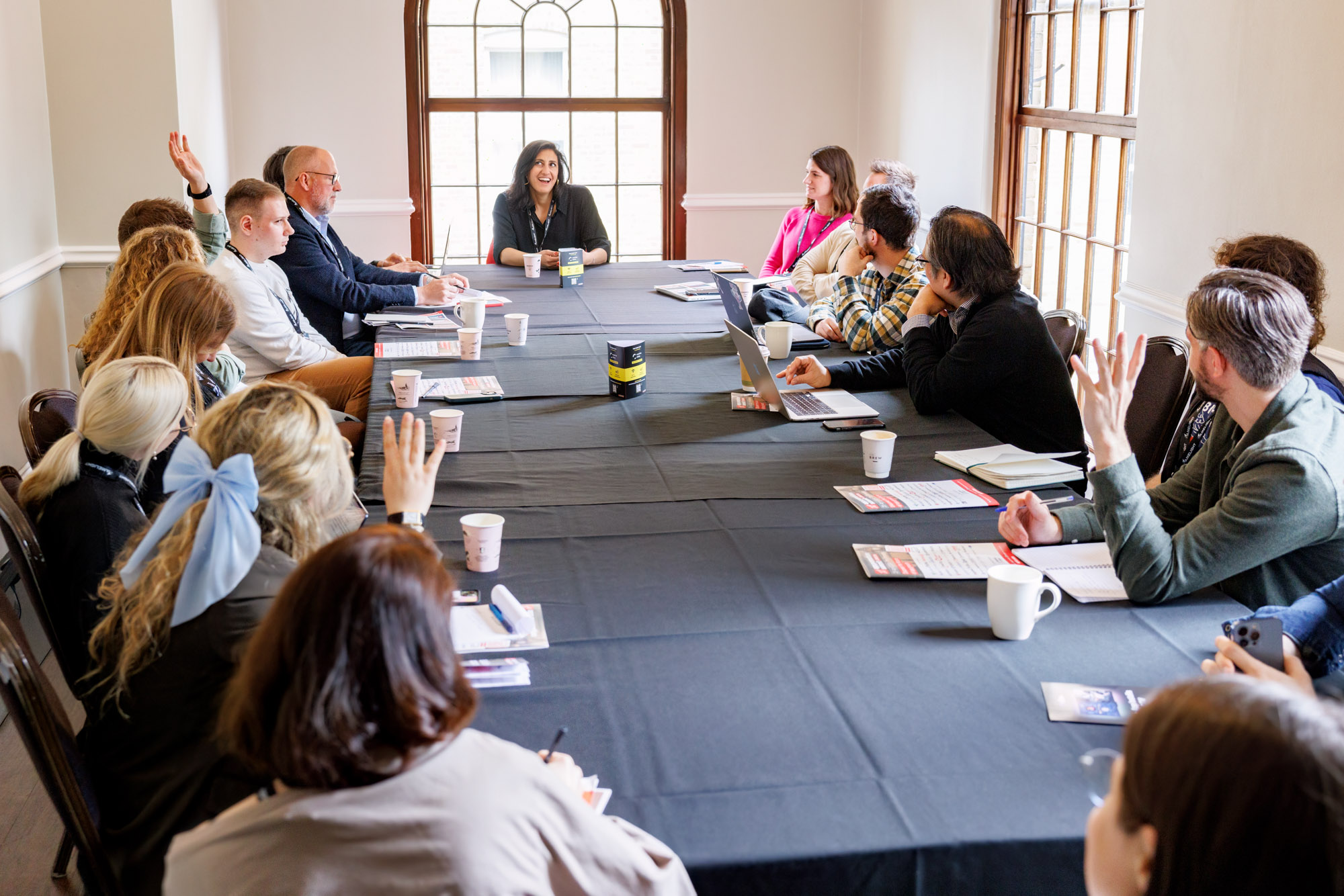
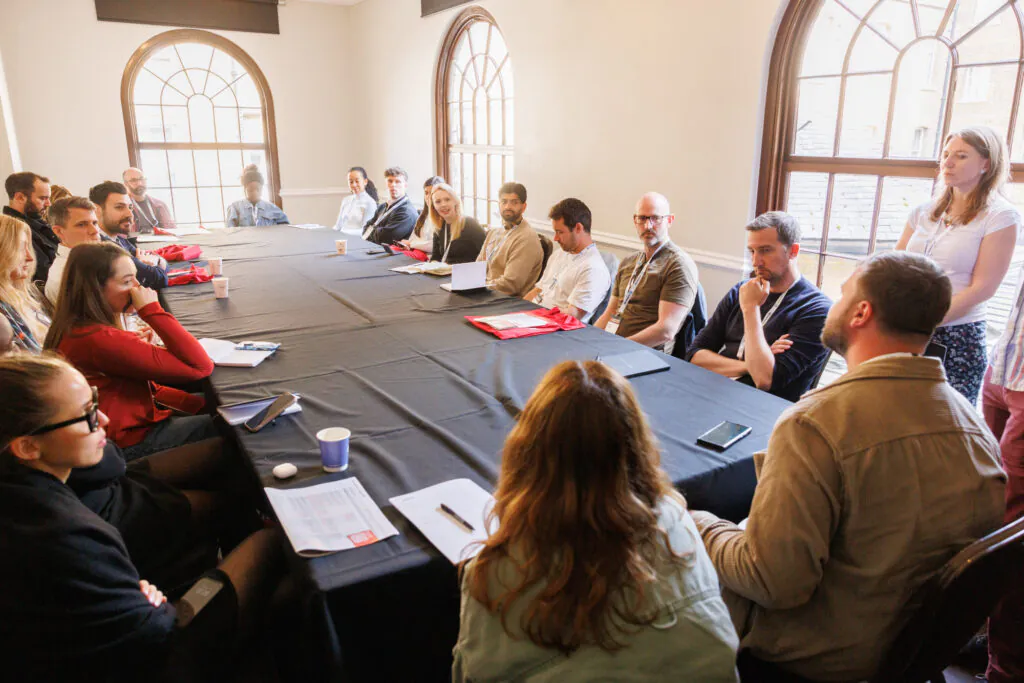
- Cabaret Style Meeting Room: A firm favourite for balancing presentations with table discussion, using circular tables with one side left open for a clear view.
- The Eye-Line Curve: For hybrid meetings, positioning the seats toward the screen ensures that remote participants are always in direct line of sight, preventing the us vs. them divide between the in-person attendees and the screen.
For a look at which setup works best for your objectives, explore our meeting room layout guide.
Lighting
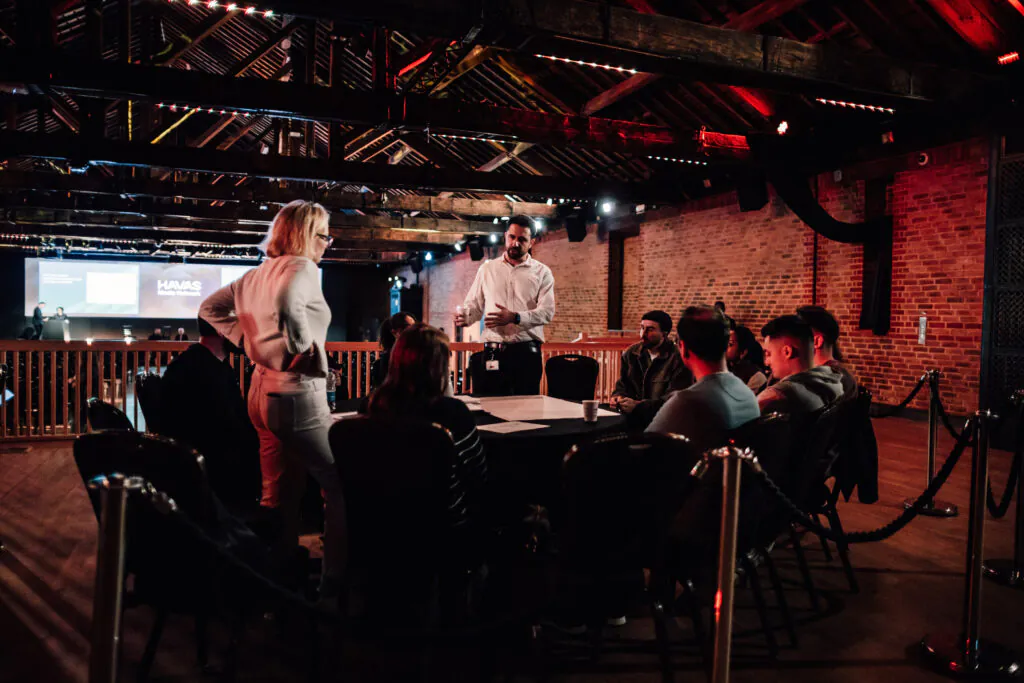
Meeting room lighting ideas often stop at “Is it bright enough?” But we can do better. Good lighting should be layered, combining ambient light for comfort, task lighting for notetaking, and feature lighting to set the mood. The most important trend for 2026 is circadian lighting. Humans are biologically wired to respond to the temperature of light – cool, blue-white tones keep us alert and focused, while warmer, amber hues signal the body to relax.
Names
Stop calling your spaces Meeting Room A or Boardroom 2 – it’s uninspiring. Give your rooms action-oriented names. When you tell a team the meeting is in The Launchpad, it suggests momentum and planning; The Think Tank hints at discussion and breakthroughs, and The Vault sounds private. Names signal the mental state required before the door even opens, subconsciously priming the brain for the specific type of work expected.

Technology
The best meeting room technology ideas disappear into the experience. Reliability is your best friend here; if your team spends the first ten minutes of a session wrestling with cables or trying to connect to the Wi-Fi, the momentum is dead before it has even started.
In 2026, the real luxury in a space isn't just a large screen; it’s a frictionless presence. This means high-spec audio-visual integration where 360-degree spatial audio and intelligent tracking allow remote participants to feel truly at the table, hearing the person in the back corner as clearly as the person at the front.
Size
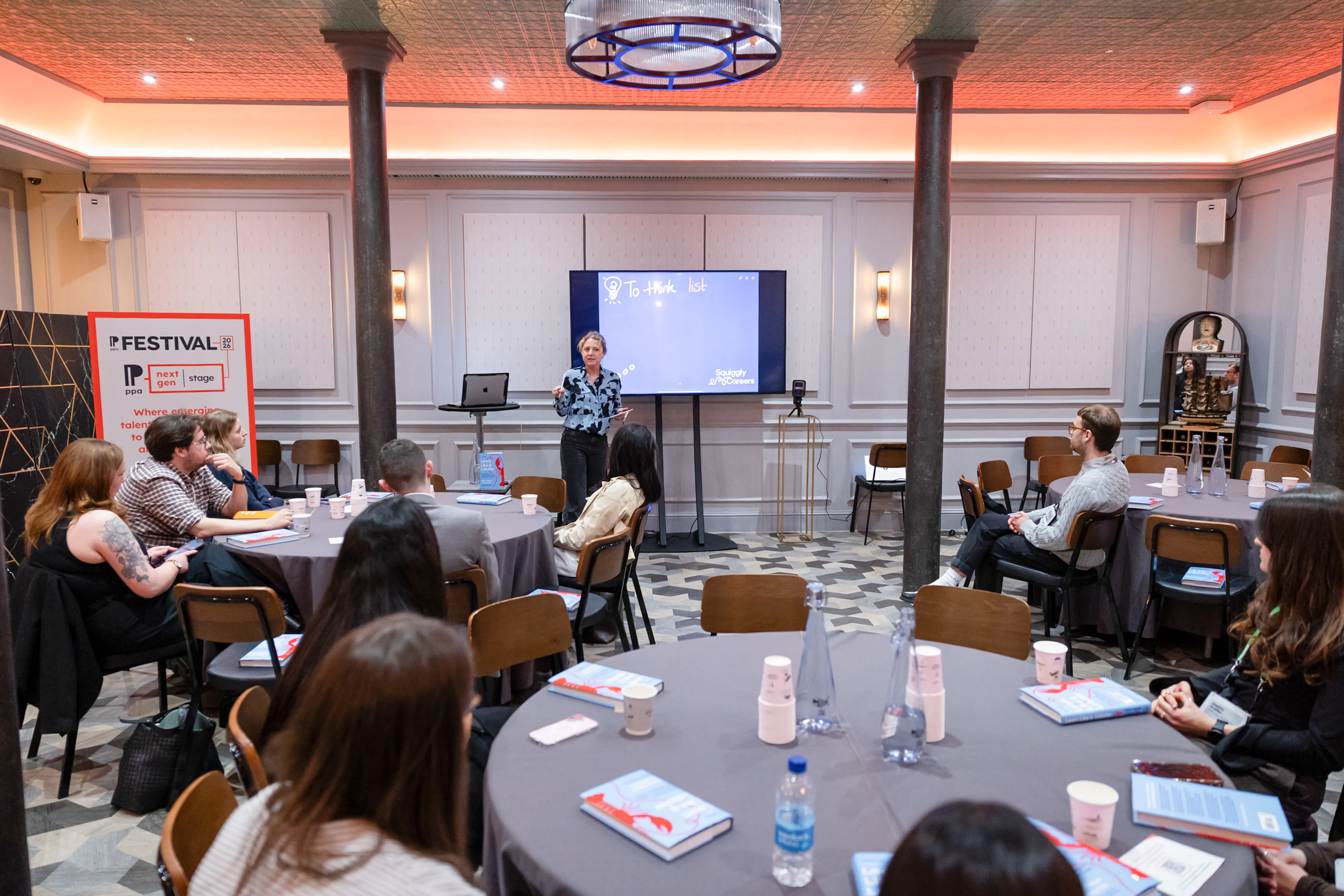
When it comes to the scale of your space, we advocate for the Goldilocks principle: it has to be just right. Bigger is not always better; in fact, an oversized room can make a group feel under-attended and lost. On the other hand, a cramped environment triggers crowding stress, which boosts cortisol levels and can negatively shift the atmosphere. This is particularly important when exploring small meeting room design ideas, as the goal is to create connection and focus without it feeling restrictive. When thinking about how to decorate a meeting room to maximise its footprint, you should always have enough room for someone to stand up, stretch, or walk over to a whiteboard without everyone else having to tuck their chairs in.
Cool Meeting Room Ideas
If you want cool meeting room ideas that go beyond the usual screen-table-chair formula, here are some specific, high-impact concepts that can make a space more inviting and productive.
The V-Shape Hybrid Hub
Standard rectangular tables are a nightmare for hybrid meetings because the people closest to the screen have to turn their backs on their colleagues to see the remote guests. By swapping to a V-shape, you angle every chair toward the camera without forcing awkward seating. It creates a seamless shape that includes those on the screen.
The Circadian Suite
Built around transition lighting, this suite works with your body’s natural clock. By using sensors to track the time of day, the room mimics the passage of the sun, shifting from morning blue to afternoon amber. This is ideal for all-day sessions, as it actively reduces eye strain and avoids that dreaded 4 pm slump, keeping everyone alert and responsive until the end.
The Cathedral Space
Have you heard of the Cathedral Effect? Research suggests that high ceilings promote abstract, big-picture thinking, while lower ceilings are better for analytical, detail-oriented tasks. To capitalise on this, utilise venues with high ceilings for strategy sessions and creative planning. This sense of openness encourages the brain to move past mundane details and broaden your perspective. Pair it with lighter furniture, fewer visual distractions and plenty of wall area for mapping your vision.
The High-Performance Tech Hub
Today’s most effective meeting room technology ideas are built for participation. The focus is shifting towards tech that enables people to share, respond and build on ideas in real time. Interactive displays, digital whiteboarding, AI camera framing, clearer audio, and live meeting notes all help the room function as a digital powerhouse for collaboration and decision-making.
The Action-Named Zones
We love the idea of categorising zones by their operational intent. This transforms a physical location into a psychological destination, where the name itself serves as a shorthand for the day's objective – here are a few meeting room names ideas:
- The Library: For quiet, focused deep-work sessions and analytical thinking.
- The Bridge: Command, control, and coordination – ideal for project management or logistics-heavy meetings.
- The Greenhouse: For growing new ideas and nurturing early-stage concepts.
The Analogue Retreat
In an age of constant notifications, sometimes the most inspiring setting is the one with no tech at all. This is a useful reset for teams who spend too much time half-listening with laptops open, forcing people off their devices and into the moment with each other. This room is tech-free, with floor-to-ceiling whiteboards and cork walls, and tactile tools like LEGO or modelling clay to unlock new ways of thinking.
The Nature Room
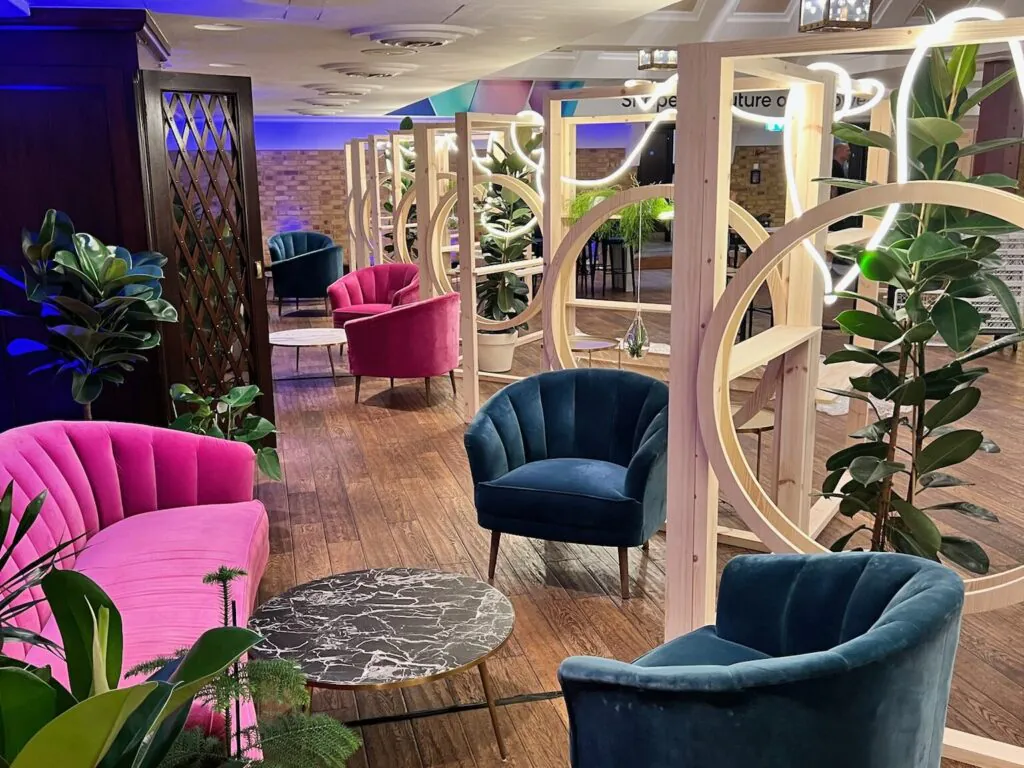
If you are looking for how to make a meeting room more inviting, biophilic design – the practice of bringing the outdoors in – is a powerful tool. Research shows that these nature-inspired spaces reduce stress while significantly boosting creativity. This goes far beyond adding a single potted plant in the corner; it’s about integrating organic textures, reclaimed wood, living walls and moss-covered acoustic panels. These elements don't only look great; they also clean the air and provide a fantastic backdrop for corporate photography or social media.
The Kinaesthetic Boardroom
Designed for those who think better on their feet, this space facilitates kinaesthetic – the processing of information through movement. By replacing traditional seating with standing-height perch furniture and an expansive perimeter, you break the mental block that comes with sitting still. Movement stimulates blood flow to the brain, helping to bypass brain fog and spark innovation.
The Snack-Centric Layout
Instead of a tray of biscuits tucked in the corner or stashed away for the break, design the room around a central fuel station and a coffee bar. This keeps the energy high and prevents the rush for the door during breaks. By focusing on brain food – like fresh fruit and protein-rich snacks – you can avoid the mid-afternoon sugar crash and keep the team's focus sharp.
The Sensory Room
This takes meeting room decorating ideas to a multi-sensory level. Use subtle scent – like citrus to provide an energy boost in the morning – and textured wall fabrics to soften the acoustics and reduce the harsh echo. It creates a premium, professional environment that feels a world away from a standard office cubicle.
The Best Meeting Rooms in London
Choosing the right environment is the first step toward a successful event. Whether you are using the biological benefits of circadian lighting, the psychological power of action-oriented naming, or the physical freedom of a kinaesthetic layout, the goal remains the same: to set your team up for a day of peak performance.
At The Brewery, we understand that a one-size-fits-all approach doesn’t work for the modern workforce. Our range of meeting rooms offer everything from characterful design, high and vaulted ceilings, to versatile blank canvases ready for whatever you need. To ensure your session is frictionless, our dedicated AV partner is on hand to support any tech requirements, from high-spec hybrid setups to interactive displays.
If you want to dive deeper into what makes a space work, our blog has plenty of resources, including a look at meeting and conference room facilities and the latest corporate event trends.
Ready to turn your next meeting into a high-impact experience? Contact us today to find the perfect fit for your team.
Back to blog