Conference & Meeting Room Facilities & Equipment
June 10, 2026
Welcome to the era of the commute-worthy venue. As we move through the year, expectations for corporate event spaces have changed, and a quiet room with a pot of coffee no longer cuts it. To justify the travel time, meeting room facilities must offer an experience that far exceeds what employees have at home. That means beating the home office on every level: better space, clearer sound, sharper video, easier sharing and expert support. We are talking about environments where the technology is so intuitive it disappears, allowing the focus to stay entirely on the people and the ideas.
We’ve already covered creative setups in our meeting room ideas article, and room configuration in our meeting room layout guide. Now we’re focusing on the next step: the hardware and infrastructure that power a friction-free corporate event.
Meeting Room Facilities Importance
Why meet in person? If it were just about sharing information, an email or a call would suffice. We choose to meet in a physical space because of the energy in the room, the ability to read body language, and the spontaneous breakthroughs that happen while grabbing a coffee or chatting in the hallway.
The right meeting room facilities act as a catalyst for these moments by removing the obstacles that often stifle creativity. When you aren't distracted by poor acoustics or awkward seating, your brain is free to focus on the task at hand. This is the core of human-centric design: creating an environment – from ergonomic furniture to temperature control – that supports the body so the mind can work.
A venue's facilities must support this high-performance state while naturally integrating any virtual attendees into the conversation. This is where meeting equity becomes vital. Without the right setup, groups often fall victim to proximity bias, where those in the room dominate the discussion simply because they are more visible.
Meeting Room Equipment List
When you’re building your meeting room equipment list, start with the basics: reliable, high-speed Wi-Fi, quality screen, balanced audio, easy power access and straightforward control panels.
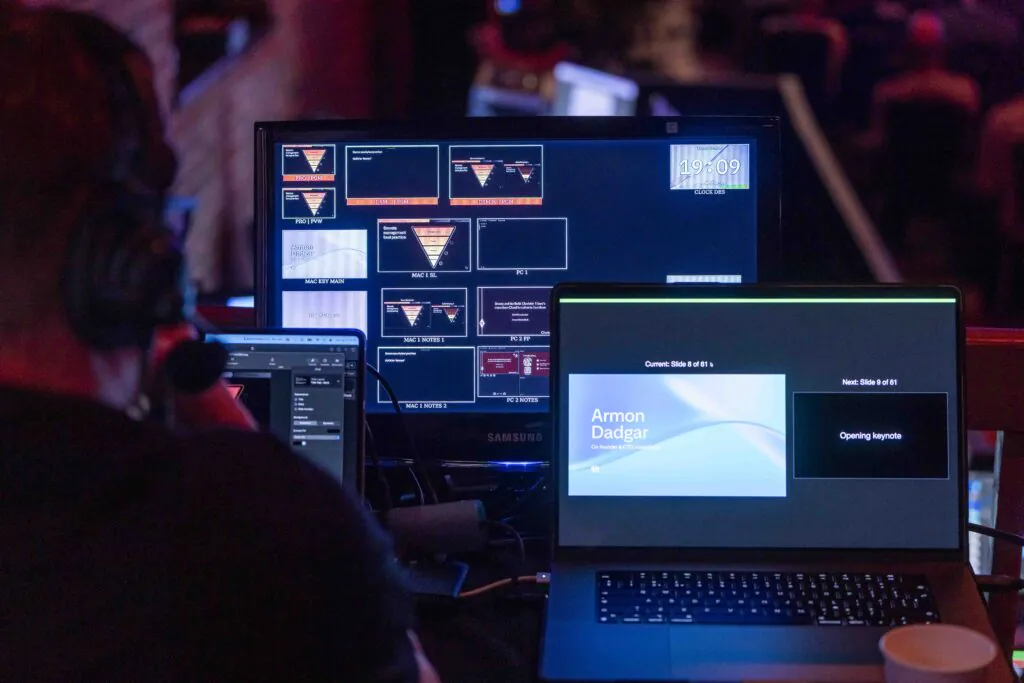
Simple? Yes. But these are the things that often cause the most stress. You should be able to walk in, plug in, and get started. The same applies to meeting room AV equipment. Organisers want the room to work with minimum fuss – they want presenters to swap over quickly, the screen to display properly, and everyone to hear clearly.
Meeting Room Cameras
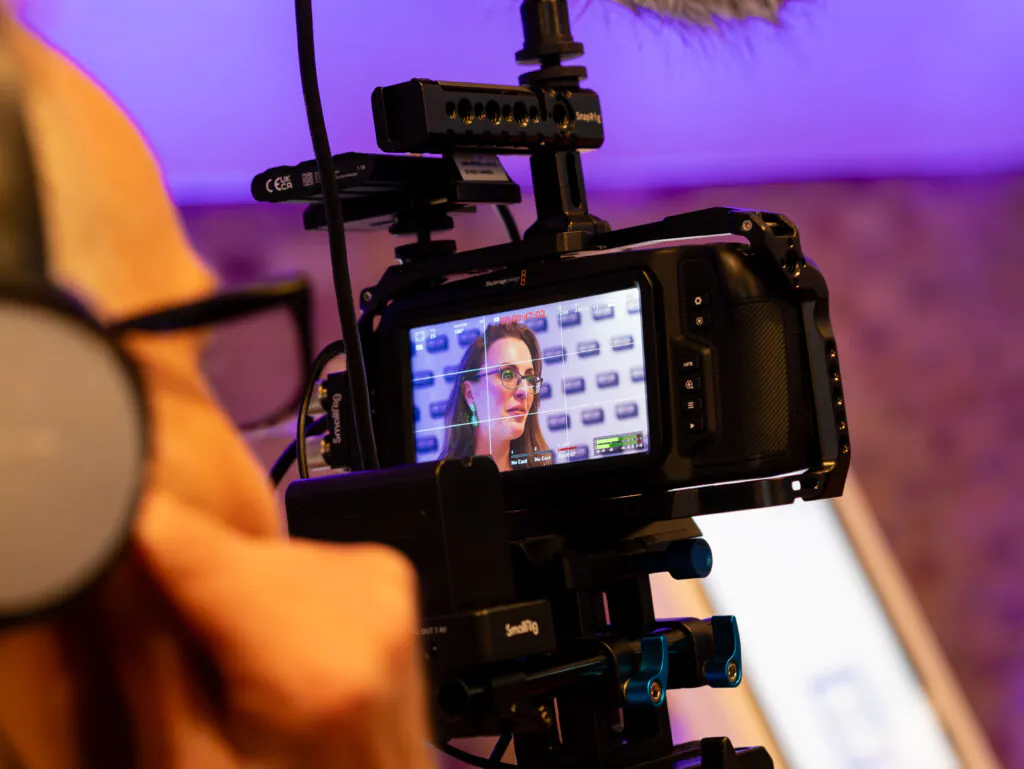
The meeting room camera is the window through which your remote participants connect with the room, so it needs to show more than a wide shot of the table. It should help people follow the discussion and give a clear sense of who is in the room. That’s why AI smart framing has become one of the most useful developments in meeting room technology. Instead of leaving remote guests staring at a static room view, the camera can automatically track the speaker and create a gallery view of the group.
Just as importantly, 4K resolution is quickly becoming the norm in modern meeting room technology. High-definition visuals make speakers easier to read, and presentations look polished and professional. For client-facing meetings and leadership events, that level of clarity reflects the quality of your brand.
Hybrid Meeting Room Equipment
Hybrid event equipment has one clear job: to bring physical and digital attendees into the same conversation. The goal is to make remote participants feel like active contributors rather than silent observers, and that starts with removing the small technical barriers.
One of the biggest shifts is BYOM (Bring Your Own Meeting) – that means plugging in with a single cable and using the room’s equipment straight away, no specific adapters required. It’s quick, simple and especially useful when everyone is using different platforms. A room should work across Zoom, Teams and Google Meet without needing a reset or a workaround.
To make the experience feel more natural, meeting room audio video equipment has also become far more sophisticated with spatial audio. Background noise like paper shuffling is filtered out, and remote voices sound clearer and more distinct, rather than all merging into one flat stream of sound. This makes the discussion easier to follow and reduces listening fatigue often associated with hybrid calls.
When selecting audio visual equipment for meeting rooms, we’ve seen the best results come from tools that improve access and participation. Our in-house AV partner, Encore, supports hybrid collaboration through solutions such as conference cameras, HD video conferencing systems and integrated streaming technologies.
For smaller meetings, the Meeting Owl 360° conference camera sits in the centre of the table and follows the speaker, ensuring remote guests always have a front-row seat. For larger or more complex sessions, Encore’s Chime Live platform adds a more interactive layer, with features such as live polling, Q&A, audience upvoting, networking, chat, personalised agendas, on-demand session access and attendee reporting. For smaller-scale events that need faster deployment, Chime Go offers a more streamlined option.
Conference Room Equipment
If the meeting room is for collaboration, the conference room is for impact. As the scale of an event grows, so does the complexity of the conference room equipment setup. Moving from ten people to hundreds requires a significant jump in infrastructure, where reliability becomes the primary currency.
At this level, your conference room equipment list goes well beyond furniture and screens. Factors like airflow and lighting become critical to keeping an audience alert. Similarly, while standard Wi-Fi works for a small group, a conference requires a network capable of handling heavy device use without a drop in speed.
Conference Room AV Equipment
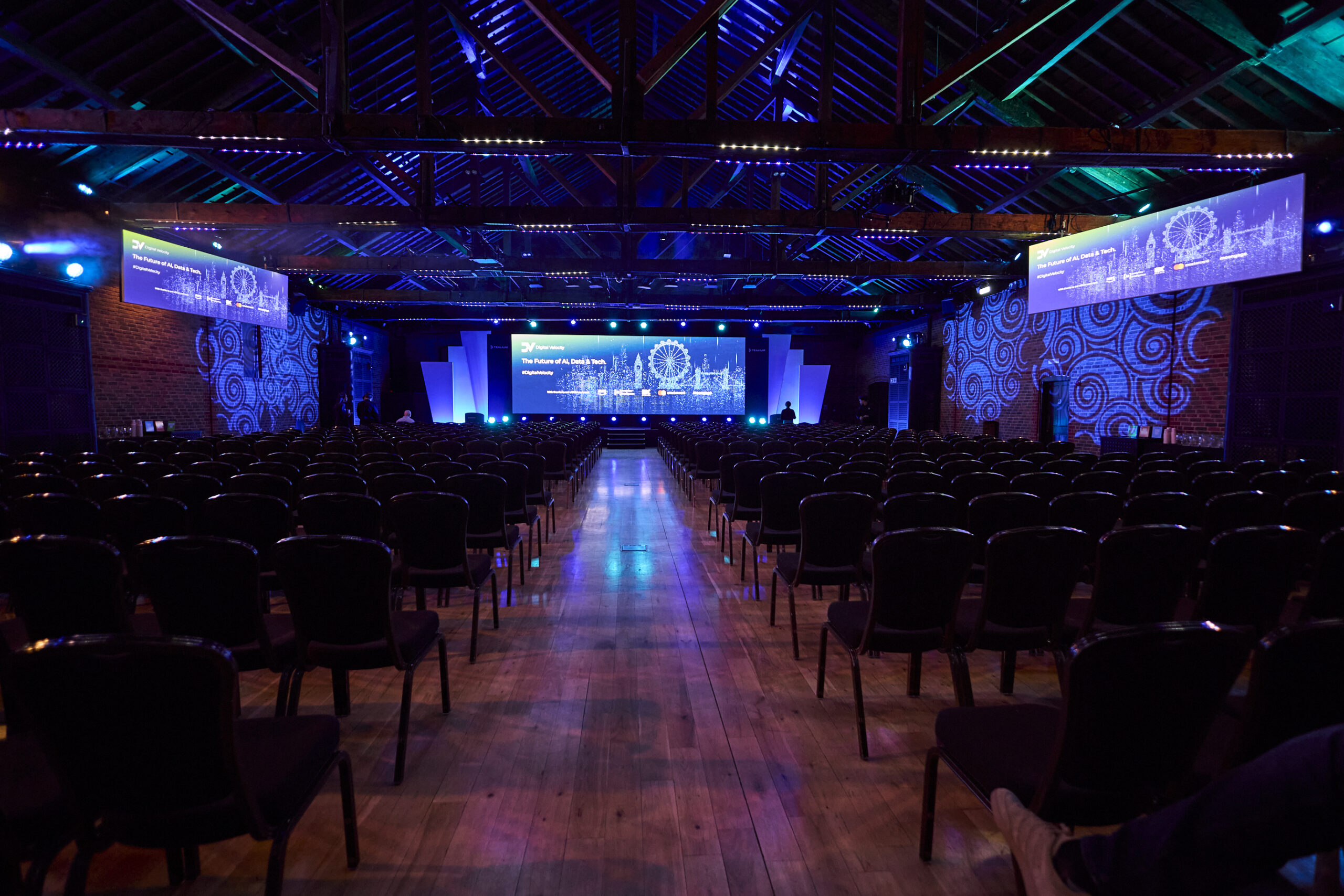
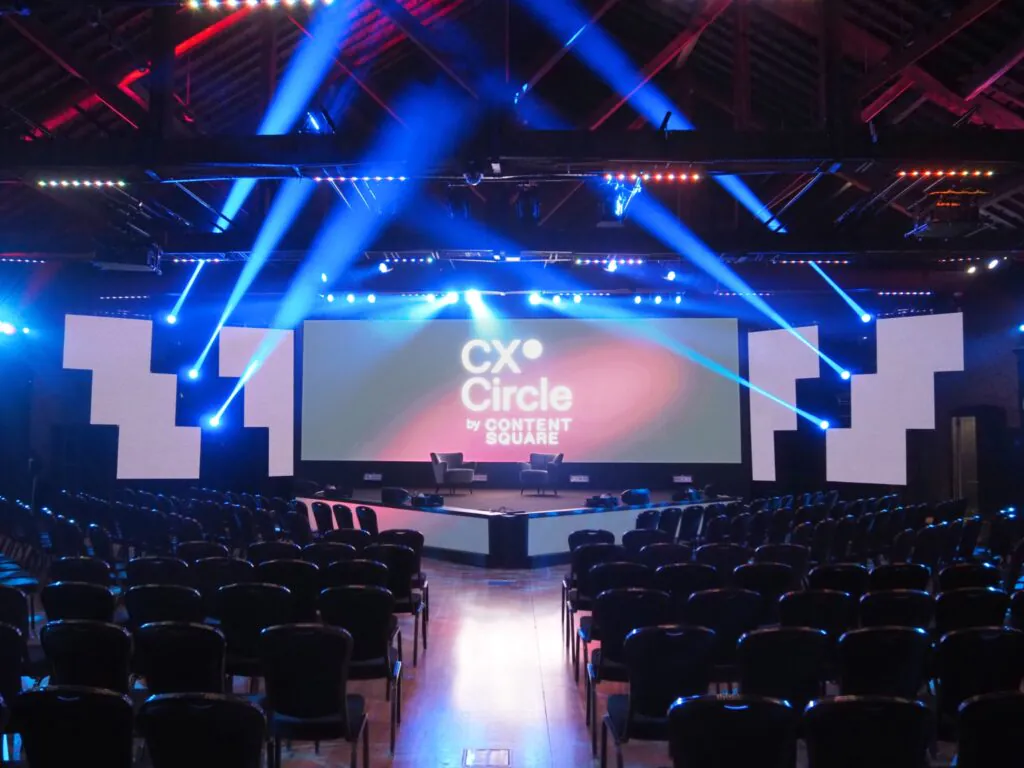
Conference room audio visual equipment needs to keep the audience with you, acting as a sensory bridge that carries the energy on stage to every seat. To achieve this, conference room audio equipment is the first priority. You want sound that wraps around the entire room, ensuring even those at the very back can follow the presentation. In larger spaces such as the Porter Tun, Encore utilises sophisticated distributed audio systems, engineered to match the acoustics. By prioritising speech intelligibility, they deliver crystal-clear sound that feels natural, rather than the harsh, echoing output often associated with traditional PA systems.
Of course, impactful AV is about more than just great sound. Visual elements like lighting, display, and staging design are what keep an audience anchored to the presentation. Rather than treating these as separate components, they should be integrated into a single, cohesive production, making sure everything flows seamlessly alongside your speakers and agenda.
Conference room audio visual equipment is also becoming more useful for international audiences. Live translation provides multilingual accessibility, making sessions easier to follow without the need for large interpretation booths.
Conference Room Presentation Equipment
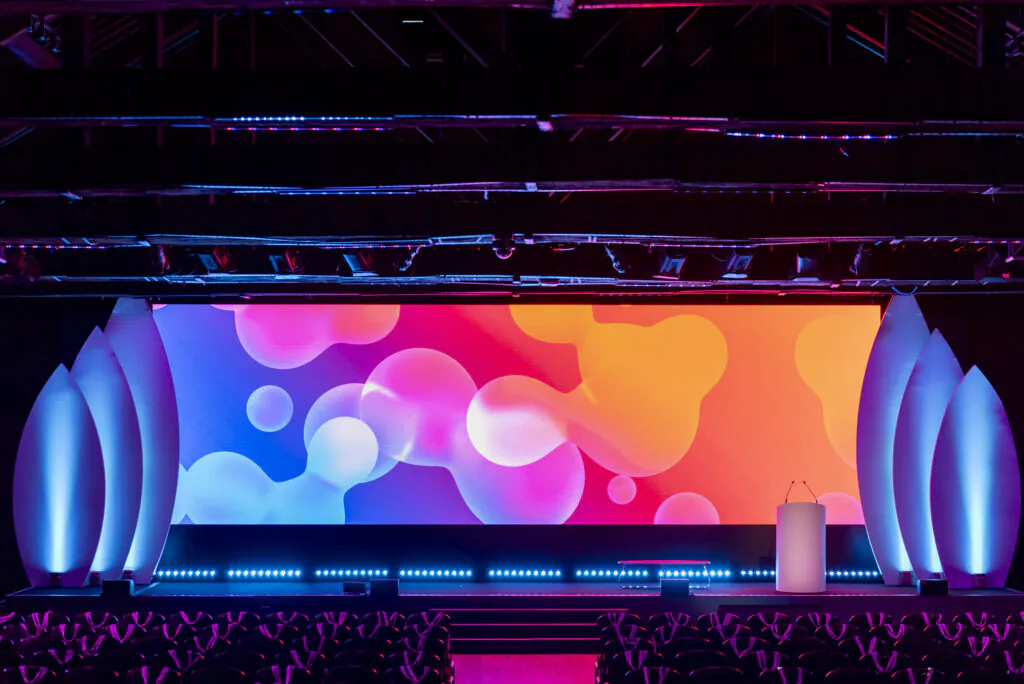
The way you present your content is just as important as the content itself. For vast spaces with big audiences, a digital canvas such as a large LED video wall can work particularly well, creating a strong visual focal point for the room. It offers the brightness and contrast needed to keep your visuals clear and vibrant. In smaller spaces, a high-quality screen or projector may be a more practical fit. The key is choosing presentation equipment that suits the scale of the event and keeps content easy to follow.
Once the main screen is in place, ease of use is the next thing to consider. Wireless sharing is now expected, with secure casting that allows presenters to connect without delay. Whether that is through tools like Barco ClickShare or AirPlay, it should be straightforward. Add kinetic lighting and LED tubes, and the room can shift tone at the touch of a button, bringing brand colours into the space for a cohesive look.

Conference & Meeting Room Technology Trends
What are the innovations in meeting room technology that will define the next year? The experts at Encore are seeing a move towards more connected event experiences, where the physical and digital sides of a meeting work together. The digital layer is not just a separate stream for remote guests, but an integrated part of the event.
Interactive Digital Environments
We have already touched on the visual power of LED walls and dynamic lighting, but the current trend is about turning those displays into interactive environments. Rather than using screens just to show static slides, presenters are now streaming live audience participation platforms and social media walls directly onto them. By displaying real-time polling results and live commentary on the main stage, you instantly turn passive listeners into active participants. For hybrid events, this involves connecting multi-location audiences through mobile event apps, ensuring a delegate sitting in the room shares the exact same access to live polling, Q&As and networking as someone logging in from overseas.
Event Insights and Engagement Analytics
Data is playing an increasingly vital role in how corporate events are designed and evaluated, and for event planners, this data is gold. Rather than relying solely on post-event feedback forms, organisers are using digital platforms to monitor audience interactions in real-time. These systems provide detailed reporting throughout the event lifecycle, tracking how audiences engage with content, which sessions perform best and where participation peaks. This insight allows planners to make more informed decisions, giving them the practical data needed to optimise the flow of a conference and refine future event planning based on actual attendee behaviour.
Sustainable Event Technology
Sustainability now features heavily in corporate event planning, with more organisers asking how their event supports wider ESG goals. We are seeing a strong move towards using scalable hybrid and virtual delivery to extend an event's reach without increasing its carbon footprint. By blending virtual participation with physical production, long-distance travel requirements can be significantly reduced. Switching to digital content distribution, on-demand access and energy-efficient AV setups allows planners to reduce production waste and be environmentally responsible.
Host Your Meeting or Conference at The Brewery
Now that you’re armed with the latest insights and trends, you’re likely looking for a space that can walk the walk. After all, even the most advanced tech is only as effective as the infrastructure supporting it.
At The Brewery, we provide that foundation – combining historic character with the practical infrastructure needed for a truly commute-worthy event. Whether you need a small meeting room for a creative session or a high-impact conference venue for hundreds, our partnership with Encore ensures your event is as reliable as it is memorable.
If you are planning your next event and want a venue that justifies the journey, we would love to help. Explore our event spaces in London, take a look at the latest corporate event trends, or contact us to see what we can do for your event.
Back to blog