Wine and Food Pairing Guide
April 4, 2025
Good wine doesn't save a bad meal, but the right combination can elevate both. For event planners, food lovers, and anyone hosting guests, understanding how wine and food pairing works is more than a party trick – it’s a practical skill.
A well-chosen wine does not just accompany a dish – it sharpens it, deepens it, or, when poorly selected, flattens it entirely. This is why wine and food pairing matters. And no, it doesn’t have to be complicated; getting it right is simpler than it sounds.
This guide strips away the guesswork and offers clear, useful advice on wine with food matching, whether you’re working with steak, seafood, or crisps, here’s how to match flavour with structure.
Food and Wine Pairing
Let’s start with the basics. Great wine food pairing isn’t just about matching red with red meat and white with fish (though that’s not a bad start). It’s about balancing flavours to create harmony – or sometimes, a delightful contrast on your plate and in your glass.
Pairing wine with food starts with a simple understanding of how matching works. Wine is defined by its acidity, tannin, alcohol, and sweetness. Food brings fat, salt, spice, sugar, and bitterness. Good wine food pairing is about balancing these forces. A well-thought-out wine combination works when flavours and textures make sense together. That means considering these elements:
- Acidity: Found in wines like Sauvignon Blanc, Riesling, and many sparkling wines. Acidity cuts through rich or fatty foods and lifts dishes with a creamy base.
- Tannin: Present in red wines, especially Cabernet Sauvignon, Syrah, and Nebbiolo. Tannins grip protein, making them well-suited to red meat and aged cheeses.
- Sweetness: Not just dessert wines. Off-dry wines (e.g., some German Rieslings) work with spicy foods. Sweetness also complements salt – Sauternes with blue cheese is a textbook match.
- Alcohol: Higher alcohol can amplify heat in spicy food, making lower-alcohol wines better suited to such dishes.
- Weight: A dish’s weight – richness, texture, intensity – should match the wine’s body. A full-bodied wine with a delicate starter overwhelms it. Light-bodied wines disappear against a slow-cooked stew.
There are no absolute rules, but there is balance. Below is a wine pairing table for quick reference:
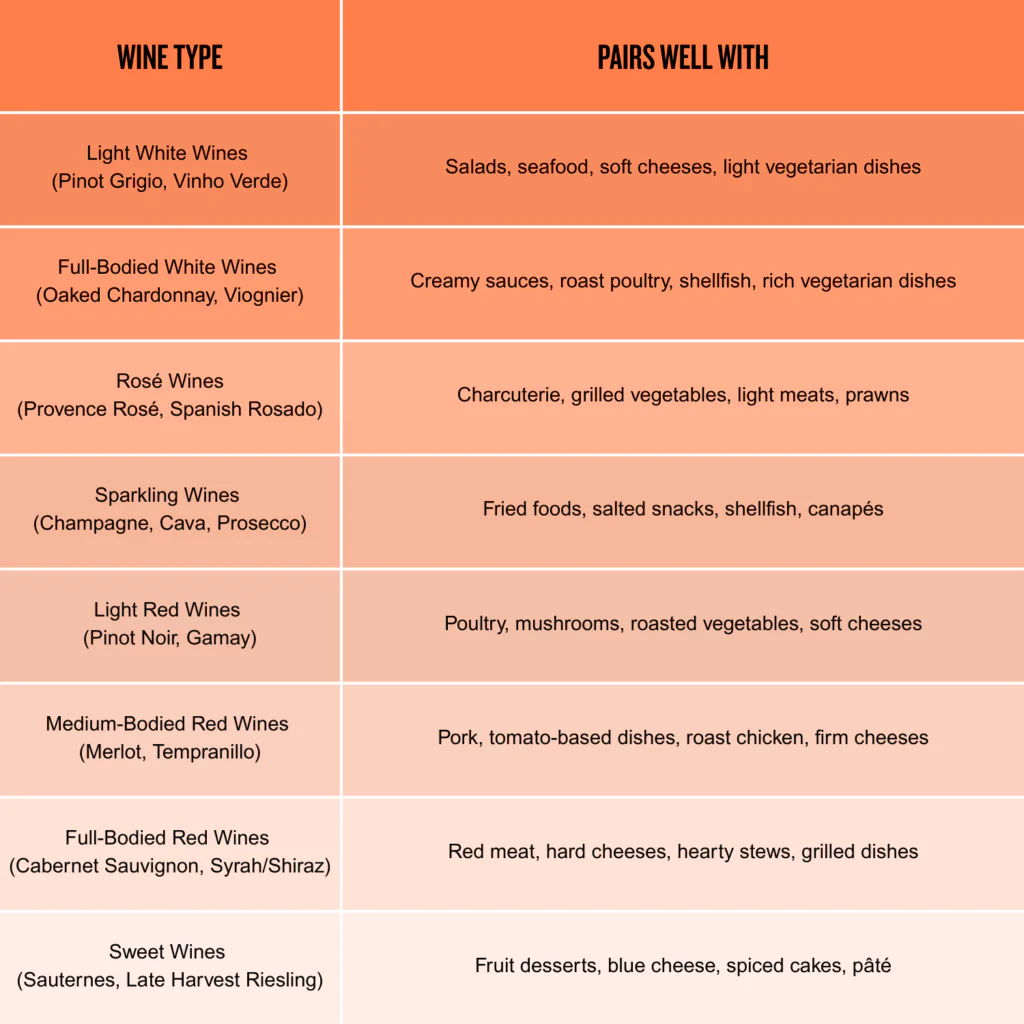
The best wine and food pairings don’t draw attention to themselves. They support the experience. Here are some wine pairing combinations that work!
Sparkling Wine with Salted Crisps
Wine with snacks is often overlooked, but sometimes the simplest pairings are best. The acidity and bubbles of sparkling wine cut through the salt and fat of crisps, cleansing the palate and making each bite feel as fresh as the first. This is equally effective with tempura and fried chicken, proving that a well-chosen wine food pairing doesn’t have to be complicated. The contrast in texture and flavour is what makes this combination satisfying.
Pinot Grigio and Margherita Pizza
Pinot Grigio’s crisp acidity balances the tomato’s natural sweetness, while its freshness keeps the melted cheese from feeling too heavy. The wine’s light body complements the delicate flavours of fresh mozzarella and basil without overpowering them. This is an easy, crowd-pleasing wine and food pairing, perfect for casual dining.
Dry Rosé and Niçoise Salad
Dry rosé, particularly from Provence, is one of the most adaptable wines for food. Its acidity and subtle fruit notes complement dishes with contrasting flavours and textures. A classic Niçoise salad – tuna, olives, capers, and vinaigrette – needs a wine with both freshness and weight. Rosé ties it all together, making the pairing feel effortlessly cohesive
Sauvignon Blanc and Summer Salads with Asparagus
Sauvignon Blanc, with its bright acidity and herbal edge, is a natural match for green vegetables. Asparagus – often tricky to pair – finds its ideal match in the wine’s citrus and grassy notes, making it a standout choice for summer salads with goat cheese, lemon dressing, and fresh herbs. The crispness of the wine keeps the flavours fresh, making this an easy yet effective wine and food pairing for lighter meals.
Pinot Noir and Earthy Mushroom Dishes
Pinot Noir’s light body and fine tannins make it a natural companion to mushroom-based dishes. The wine’s red fruit character is lifted by the earthiness of wild mushrooms, whether in risotto, pasta, or simply grilled. Dishes featuring truffle, porcini, or chestnut mushrooms work particularly well, enhancing the wine’s subtle, savoury depth.
Chardonnay and Lobster with Herb Butter
Few wine and food pairing choices feel as natural as Chardonnay with lobster. The wine’s full body and creamy texture mirror the weight of the lobster, while its citrus and oak-influenced notes enhance the butter’s richness. This is a pairing that thrives on harmony – where neither element dominates; both benefit, allowing the lobster’s sweetness and the wine’s depth to complement each other perfectly.
Off-Dry Riesling and Thai Curry
Spice and wine are often mismatched, and spicy food can present a challenge for wine with food matching. However, off-dry Riesling handles the heat well. The wine’s slight sweetness tempers the spice, while its acidity keeps the palate refreshed. Thai green curry, with its coconut milk richness and aromatic spice, is an excellent match, allowing Riesling’s citrus and floral notes to shine. This pairing also extends to other chili-infused dishes, including Sichuan cuisine and Indian curries.
Merlot and Milk Chocolate
Merlot’s soft tannins and ripe fruit make it one of the few red wines that can handle chocolate without clashing. With milk chocolate, the wine’s plum and cherry notes complement the cocoa’s richness, creating a smooth, indulgent match. If you’re wondering what food Merlot goes with beyond chocolate, it pairs exceptionally well with rich meats, tomato-based sauces, charred barbecue dishes, and certain cheeses. Its easy-drinking nature makes it particularly versatile for events or meals with varied menus.
Cabernet Sauvignon and Hard Cheddar
Cabernet Sauvignon’s firm tannins and dark berry notes demand food with enough weight to match. Aged cheddar, with its concentrated umami and slight sharpness, stands up to the wine’s structure while softening its tannic bite. It’s a straightforward match – balanced, familiar, and effective. Both elements are bold, bringing out deeper complexity in each other, making this pairing a classic that’s always reliable.
Syrah and Grilled Steak with Peppercorn Sauce
Syrah (or Shiraz) is built for bold, savoury foods. Its deep black fruit, spice, and smoky notes stand up to the richness of grilled steak, particularly when served with a peppercorn sauce that highlights the wine’s own peppery undertones. This is a pairing that thrives on intensity, where the wine’s structure and depth elevate the dish rather than compete with it.

The Brewery Your Event Venue in London
At The Brewery, food and wine are an integral part of every event. We’ve partnered with Liberty Wines, one of the UK’s most respected wine suppliers, to create thoughtful wine pairings that elevate our seasonal menus. Whether you're hosting a corporate gathering or a private celebration, we believe that food and drink should be more than just a side note.
Our menu is designed with wine pairing in mind. Awarded Gold for Best Catering at a London Venue in 2023 and Silver for Best In-House Caterer in 2024, our team goes beyond the basics of event catering. Each dish is carefully considered, and the wine list is curated to complement the flavours.
For event planners, attention to detail is key. Generic menus and wines that don’t match the dishes can fall flat. At The Brewery, we understand the importance of pairing flavours thoughtfully, ensuring that every element contributes to the overall experience.
This isn’t just a concept – it’s something we’re already delivering across our venue’s spaces. We offer a practical, well-executed approach to food and wine pairing that meets the expectations of guests who appreciate quality and thoughtfulness. To learn more, visit our food and drinks page.
Back to blog